Generative engine optimization (GEO) is the practice of making your content easy for AI search tools, such as ChatGPT, Perplexity, Gemini and Google’s AI Overviews, to find, trust and cite when they answer a question. It builds on SEO fundamentals and adds clear answers, structured data and credible mentions. Our AEO and GEO service puts this into practice.
Table of Contents
What is GEO, and why does it matter?
GEO is a response to a change in how people search. Instead of scanning ten blue links, a growing number of people ask a question and read a generated answer that cites a handful of sources. If your page is one of those sources, you are part of the answer. If it is not, you may be invisible to that searcher.
The term was formalized in a 2023 research paper from a team of academics, “GEO: Generative Engine Optimization” (Aggarwal et al.), which introduced a benchmark for testing how content changes affect visibility in generative engine responses. The authors reported that GEO methods can boost visibility by up to 40%, and that how well each tactic works varies by domain. That second finding matters: there is no single trick that works everywhere.
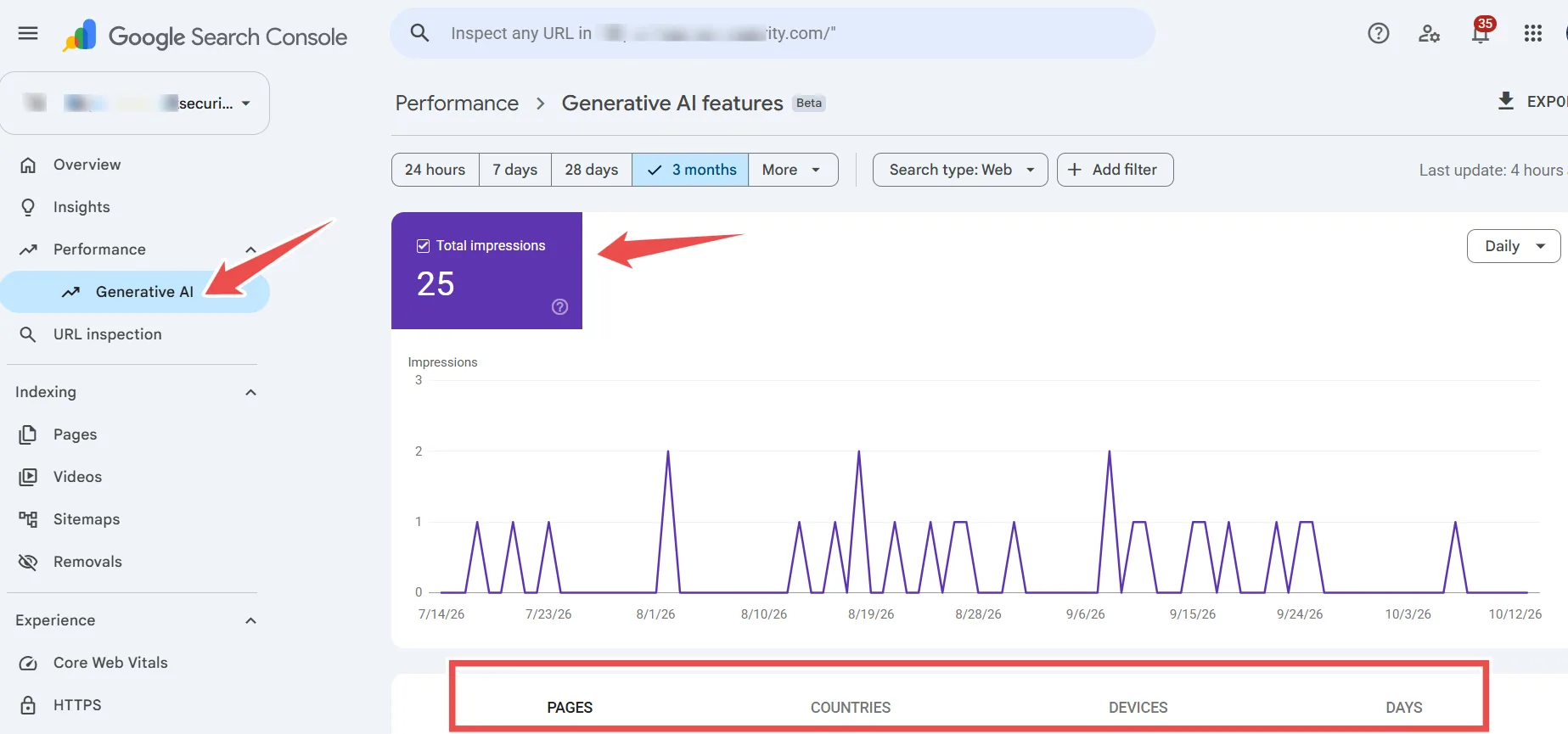
Google has also made AI part of ordinary search. Its documentation on AI features describes AI Overviews and AI Mode, which show links to supporting pages, and says traffic from these features is reported inside the standard “Web” search type in Search Console. There’s also a new section inside Google Search Console where this is being reported in the “Generative features” in the “Performance” report as well. For a business, the practical point is simple. Being cited in AI answers is now a visibility channel alongside rankings, and it rewards some of the same work and some different work.
GEO vs SEO vs AEO: what is the difference?
The three terms overlap heavily. In short: SEO earns rankings and clicks, AEO earns the direct answer, and GEO earns a citation inside a generated, multi-source answer. Most real projects do all three together, because the foundations are shared.
| SEO (search engine optimization) | AEO (answer engine optimization) | GEO (generative engine optimization) | |
|---|---|---|---|
| Goal | Rank in search results and earn clicks | Be the direct answer to a specific question | Be cited or mentioned in AI-generated answers |
| Where it shows up | Search results pages | Featured snippets, voice and answer boxes | ChatGPT, Perplexity, Gemini, Google AI Overviews and AI Mode |
| Core tactics | Crawlability, content, links, page experience | Answer-first writing, question headings, FAQ markup | Everything in AEO plus authority, original data and third-party mentions |
| How you measure it | Rankings, clicks, conversions | Snippet and answer ownership | Citation and mention tracking across engines |
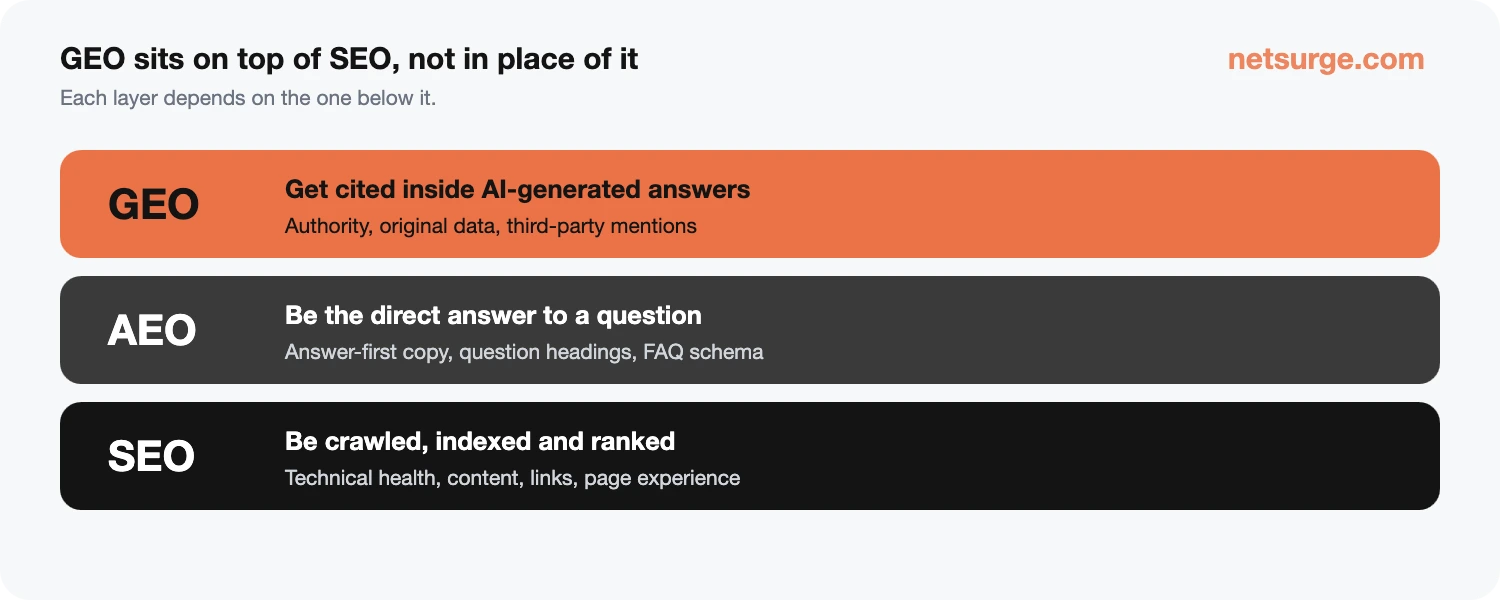
If you are choosing where to start, start with SEO. A page that cannot be crawled, indexed and understood will not be cited by anyone.
How do AI engines pick which sources to cite?
No AI company publishes its full source-selection formula, so anyone who claims to know exactly how citations are decided is guessing. What these companies do document is useful, though. So we went through their documentation find out what they say about it and what’s in between the lines.
Google: Its guidance says a page must be indexed and eligible to be shown with a snippet to appear as a supporting link in AI Overviews or AI Mode. Google states there are no additional technical requirements and no special markup or AI-specific files needed. It also explains that these features may use a “query fan-out” technique, running several related searches behind one question, which can surface a wider and more diverse set of links than a classic search would.
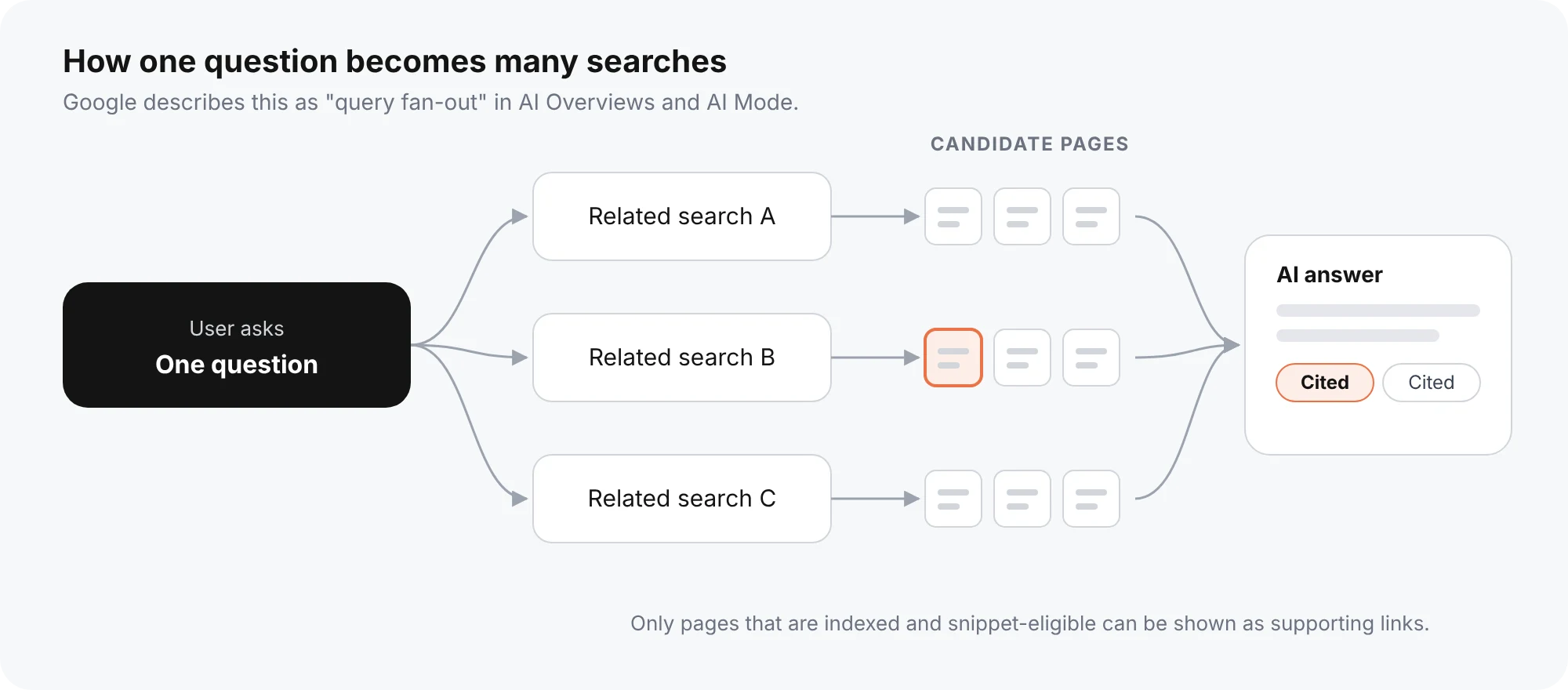
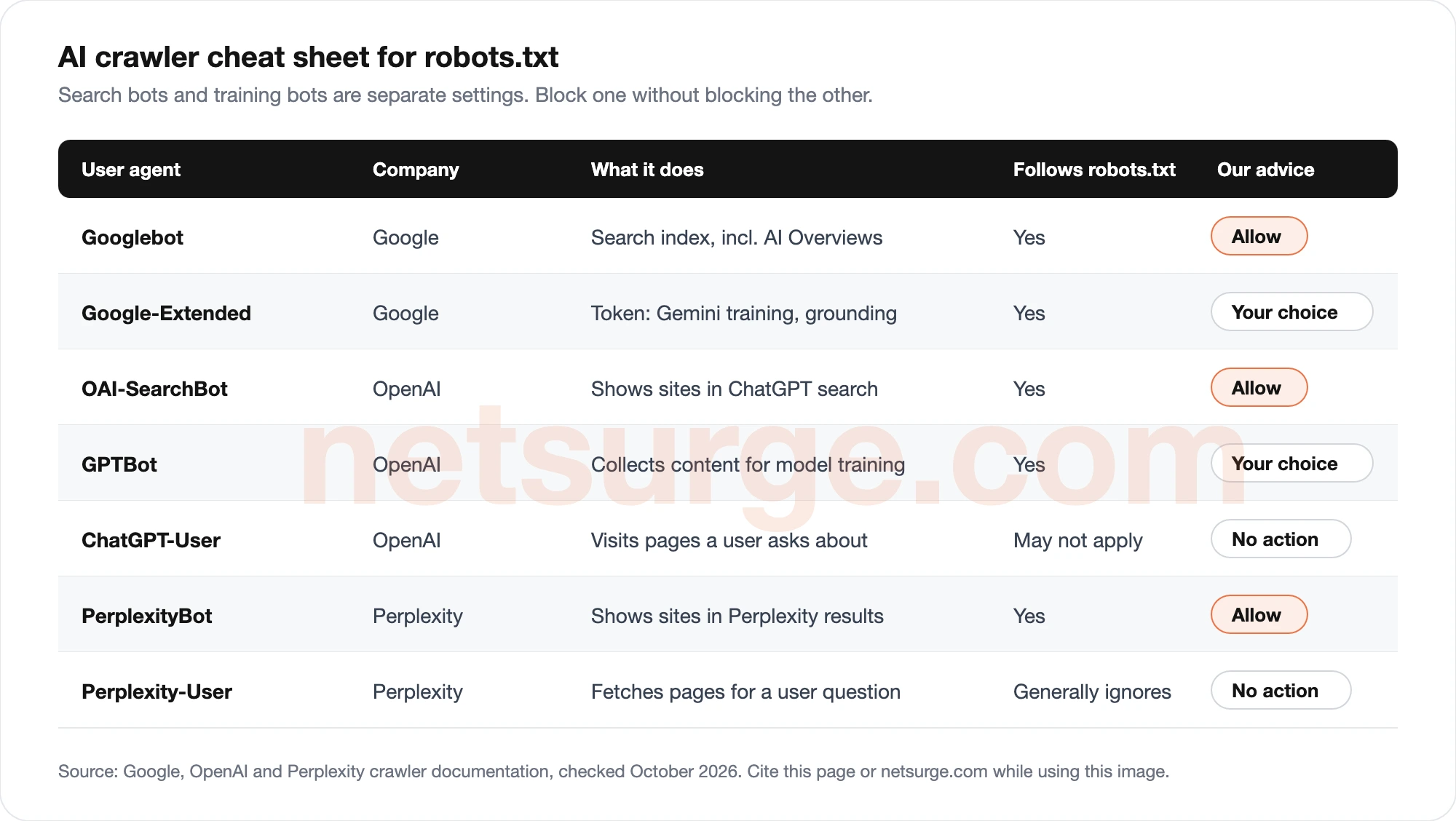
Perplexity: Its documentation says PerplexityBot is designed to surface and link websites in Perplexity search results, and is not used to crawl content for AI foundation models. A separate agent, Perplexity-User, fetches pages when a user’s question calls for it. Perplexity recommends allowing PerplexityBot in robots.txt.
OpenAI: Its documentation describes separate crawlers with independent robots.txt settings. OAI-SearchBot surfaces websites in ChatGPT’s search features, and OpenAI recommends allowing it; sites that opt out will not be shown in ChatGPT search answers, though they can still appear as navigational links. GPTBot is used for content that may train OpenAI’s foundation models, so disallowing it does not remove you from search. ChatGPT-User visits pages when a user’s request triggers it, and because those actions are user-initiated, robots.txt rules may not apply.
What this means in practice: Citations start with access: if an engine’s crawler cannot reach and read your page, you cannot be cited. After access, pages that answer the question clearly, in text, with supporting facts are easier to quote. Every vendor’s documentation changes, so check the current crawler pages for each engine you care about rather than relying on a blog post, including this one.
How do you optimize for GEO?
There is no secret lever. The work is a set of habits that make a page easy to find, easy to understand and easy to trust.
- Get the SEO fundamentals right. Allow crawling, keep important pages indexable, link them internally, and put key content in text rather than images. Google’s AI features guidance points to these same basics.
- Write answer-first. Put a direct 40 to 60 word answer under each question-style heading, then add the detail. This is the passage an engine can lift cleanly.
- Structure the page. Use clear headings, short paragraphs, tables for comparisons and lists for steps, so each section stands on its own when quoted.
- Back claims with evidence. Cite named sources, share original data or first-hand results, and avoid statistics you cannot source. Thin, generic content gives an engine little reason to choose you.
- Use structured data honestly. Schema such as FAQPage, Article and Organization helps machines read a page, but Google says structured data should match the visible text.
- Decide your crawler policy deliberately. Review robots.txt for the search crawlers you want to reach you, such as OAI-SearchBot and PerplexityBot. Blocking a training crawler such as GPTBot is a separate choice. Check that a CDN or security plugin is not blocking these bots by accident.
- Earn mentions beyond your site. In our experience, engines often lean on third-party pages such as reviews, directories, industry publications and community discussions. Treat this as a working hypothesis to test, not a documented rule.
If you would like a team to run this for you, see our AEO and GEO service.
How do you measure GEO results?
Measurement is the weak spot of GEO, so be honest about what you can and cannot see.
Google recently added a “Generative AI features” tab in the “Performance” in Search Console, but the data we can get as of now is limited since we can’t see the queries for which a website was cited. Here’s a screenshot of the report from one of our testing sites:
Availability of tracking data is also none to limited for other engines too. While more tracking data is shared by the AI companies, and tracking tools are build across it, we recommend to build a simple tracking routine yourself:
- Pick 20 to 30 prompts your customers would really ask, including brand, category and comparison questions.
- Run them in ChatGPT, Gemini, Perplexity, Claude and Google AI Overviews, and record whether you are mentioned, cited or absent.
- Note which competitors and which third-party pages appear instead.
- Repeat monthly with the same prompts and compare the trend.
- In your analytics, watch referral traffic from AI tools and the conversions it produces.
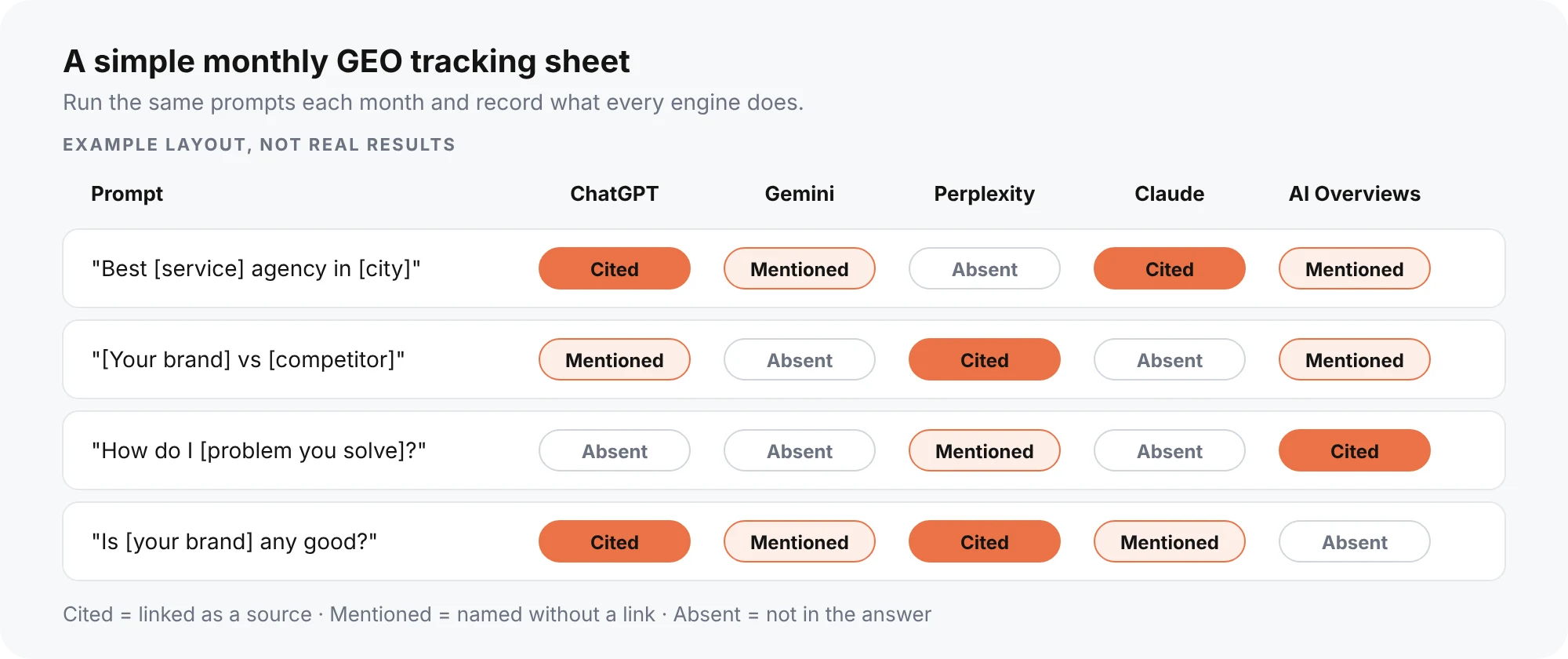
AI answers change between runs, so one result proves little. Look for direction over several months, and tie it back to leads and revenue rather than citations alone.
What are the most common GEO mistakes?
- Chasing hacks. Google says no special files or markup are needed for its AI features. Spend effort on content and access before tricks.
- Blocking the crawlers you want. Security plugins and CDN rules can block AI bots without anyone noticing. Test with the vendors’ documented user agents.
- Burying the answer. Long preambles before the point make a page harder to quote.
- Publishing unsourced claims. Invented or unsourced statistics damage trust with readers and engines alike.
- Abandoning SEO. A page that is not indexed cannot be cited. GEO sits on top of SEO, not in place of it.
- Measuring once. AI answers shift, so a single check tells you almost nothing.
Frequently asked questions
Is GEO different from SEO?
GEO overlaps heavily with SEO. Google says the same fundamentals apply to its AI features: crawlable, indexed, helpful pages with good page experience. GEO adds a focus on being quotable inside a generated answer, through answer-first writing, clear structure and credible third-party mentions, and it measures success in citations as well as clicks.
Do I need an llms.txt file?
Google states you need no special files or markup to appear in its AI features. The llms.txt file is a proposed convention, and we did not find confirmation in the vendor documentation we reviewed that major AI engines rely on it. However, one we have observed that in Google’s PageSpeed Insights test, it is being checked for under the Agentic Browsing section so we recommend that you have it on your website.
Can I block AI crawlers and still be found?
Crawler controls are separate for each company. OpenAI says OAI-SearchBot, which surfaces sites in ChatGPT search, and GPTBot, which gathers training content, are independent settings, so you can allow one and block the other. Perplexity says PerplexityBot surfaces sites in its results. Decide bot by bot, and read each vendor’s documentation first.
How long does GEO take to work?
No one can promise a timeline, because AI answers vary between prompts and engines. Work that improves crawlability and content structure can be in place within weeks, but earning consistent citations usually depends on authority built over months. Track the same prompts monthly and judge the trend, not single answers.
Can anyone guarantee a ChatGPT citation?
No. AI answers are generated per query and change over time, and no agency controls them. The GEO research paper reported visibility gains of up to 40% in its benchmark, but results varied by domain. Anyone promising guaranteed citations is overstating what is possible.
Want to be cited in AI answers?
Netsurge helps businesses in the US, Canada, Europe and Australia get found in ChatGPT, Gemini, Perplexity and Google’s AI and Gemini results, on top of solid SEO. We start by checking which AI engines mention you today and where competitors are winning.
See our AEO and GEO service to find out what the work involves and how we report on it.
Last updated: October 16th, 2026. Reviewed by: Netsurge Content Team.
Sources
- Google Search Central, AI features and your website
- Aggarwal et al., GEO: Generative Engine Optimization, arXiv:2311.09735
- Perplexity documentation, Perplexity crawlers and user agents
- OpenAI, Overview of OpenAI Crawlers